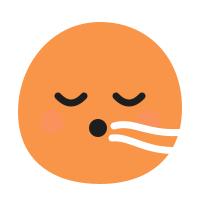
Ocean breath
By slightly narrowing your throat, your breath makes a soft sound, like the surf (yoga’s ujjayi breath). You follow that wave sound as it rises and falls.
- Recommended duration
- 3 to 5 minutes.
- When to use it
- To unwind after the day, while stretching, to calm down.
Try it now
Breathe in
Follow the animation, the same as in the app.
How to do it
- Breathe in through your nose for 5 seconds, throat slightly narrowed.
- Breathe out through your nose for 7 seconds, keeping the wave sound.
- Listen to your breath, like the sea coming and going.
- Keep the sound soft, never forced.
What it does
- Slow, steady breathing
- The sound helps you stay focused
- Relaxes your whole body
Where does it come from?
Ocean breath is the descriptive name for a classic yoga breath, ujjayi, often translated as “victorious breath”. It is one of the breathing practices (pranayama) described in old hatha yoga texts such as the Hatha Yoga Pradipika. What sets it apart is a slight narrowing at the back of the throat, which slows the air down and creates a soft sound.
That sound is reminiscent of the surf, hence its name in English and French alike. Ujjayi breathing is widely used in flowing yoga classes, where students keep this audible rhythm while moving through the poses. You can also practice it on its own, seated or lying down, as a relaxation exercise in its own right.
What the science says
Few studies look specifically at ujjayi breathing, and the results are still preliminary. What is better understood is the effect of the rhythm it helps you keep: a 5 second inhale and a 7 second exhale, or 5 breaths a minute. A meta-analysis (Laborde et al., 2022) shows that slow breathing increases the heart rate variability linked to rest and recovery. A review (Zaccaro et al., 2018) also associates it with more calm and alertness.
Narrowing your throat slightly brakes the airflow, which makes slowing down feel effortless. And the sound gives your attention something to rest on, like the noise of waves. These effects are modest and vary from person to person: ocean breath is a relaxation practice, it does not replace medical advice.
Common mistakes
- Squeezing your throat too hard: the sound should stay soft, like a whisper. If it rasps or sounds like snoring, ease off.
- Trying to make noise: the sound is a byproduct of slow breathing, not the goal. It can be barely audible.
- Breathing through your mouth: both the inhale and the exhale go through your nose, mouth closed.
- Tensing your face or shoulders: only your throat works, just a little, and the rest of your body relaxes.
- Pushing through discomfort: if you cough, your throat gets irritated or you feel dizzy, go back to normal breathing.
Tips to progress
- To find the sound, first breathe out with your mouth open saying “haaa”, as if fogging up a mirror, then close your mouth and keep the same feeling.
- Listen to the sound rise as you breathe in and fall as you breathe out, like a wave rolling in and back out.
- Practice it during a few gentle stretches in the evening to link movement and breath.
- If narrowing your throat bothers you, keep the same rhythm without the sound: it is close to coherent breathing, with a longer exhale.
- Like breathing with sound? Try bee breath as well, or gong breathing to be guided without a voice.
In the app, this technique is guided by a voice, its own animation and ambient sounds. To create your own rhythm, use BreathLab.
Ocean breath: frequently asked questions
How do you do ujjayi breathing?
With your mouth closed, gently narrow the back of your throat. Breathe in through your nose for 5 seconds and out through your nose for 7: the air makes a soft wave sound. Keep this rhythm for 3 to 5 minutes.
Why is it called ocean breath?
Because slightly narrowing your throat gives your breath a sound that resembles the surf. In yoga, its original name is ujjayi.
Can I do ujjayi breathing during yoga?
Yes, that is where you will meet it most often. It helps you keep a slow, steady breath through the poses. If you are new to it, learn it seated and calm first.
Does ocean breathing help you calm down?
It slows your breath and gives your mind a sound to follow, which helps many people relax. The effects are modest and vary from person to person.
Are there any precautions?
It is gentle and suits most adults. Never force your throat. If you have a breathing problem, a sore throat or feel unwell, stop and ask your doctor for advice.
Other techniques

Box breathing
Get your focus back
4 · 4 · 4 · 4
4-7-8 breathing
Fall asleep faster
4 · 7 · 8

Abdominal breathing
Release tension
4 · 6

Dynamic breathing
Recharge
30 × 1 · 1, then 15

Mantra breathing
Quiet racing thoughts
4 · 6
Staircase breathing
Lengthen your breath step by step
2 to 7 s
Prolonged exhalation
Bring tension down
4 · 8
Coherent breathing
Find your balance
6 · 6
Alternate nostril breathing
Rebalance your mind
4 · 4 · 4 · 4
Physiological sigh
Defuse a crisis
3 · 1 · 6
NewGong breathing
Breathe to the sound, no voice
5 · 7
NewBee breath
Calm down by humming
4 · 8
NewBreath counting
Anchor your attention
4 · 6
moopy flow is out on iPhone
7 day free trial, no commitment.
On Android? Try the app now and get 3 months of Premium free